
Sustainability has become a structural feature of luxury business strategy rather than a standalone communications strategy. Today’s heritage houses are now implementing programmes that address environmental impact across sourcing, production and distribution — with increasing focus on traceability, emissions reduction and circularity. From regenerative materials to ethical sourcing and climate-conscious operations, these actions demonstrate how the luxury industry is integrating environmental and social responsibility into its core business strategies.
Governance-wise, sustainability is operationalised through a multi-layer structure comprising a Sustainable Development Board, a cross-entity directors’ committee (C3D) and local sustainability committees embedded across métiers and subsidiaries, ensuring that Environmental, Social and Governance (ESG) priorities directly inform operational decisions rather than remaining at the reporting level.
Louis Vuitton’s Regeneration 2030

As part of its “Regeneration 2030” roadmap, Louis Vuitton is advancing a structured environmental transition strategy that integrates climate, biodiversity and water into a unified value-chain framework aligned with the Science Based Targets initiative. On climate, the House commits to an ambitious decarbonisation trajectory contributing to a -68 percent reduction in Scope 1 and 2 emissions by 2030 and aligns its broader footprint reduction across Scopes 1, 2 and 3 with the Paris Agreement. On biodiversity, the strategy moves beyond conservation toward ecosystem regeneration, targeting 1 million hectares of habitat restoration or protection by 2030, supported by regenerative sourcing programmes including leather, cotton and wool linked to deforestation-free supply chains and regenerative agriculture systems.


A key external initiative includes its partnership with People For Wildlife, a five-year conservation programme covering 400,000 hectares in Northeastern Australia, focused on habitat restoration and species protection. Water is elevated as a standalone strategic pillar for the first time, with a target to reduce water consumption by 30 percent by 2030 and ensure 100 percent of sites implement sustainable water management systems, alongside efforts to improve water quality and strengthen watershed resilience in supplier regions.
Prada Re-Nylon & SEA BEYOND

Prada’s Re-Nylon initiative continues to position circularity as both a material innovation and a narrative framework for environmental responsibility. Built around regenerated nylon derived from recycled plastic waste, the programme signals a shift away from virgin synthetics towards closed-loop production systems, with the material now progressively integrated across accessories and ready-to-wear. However, its sustainability strategy extends well beyond fabric composition. Central to the initiative is SEA BEYOND, Prada Group’s long-running partnership with the Intergovernmental Oceanographic Commission of UNESCO, which focuses on ocean literacy and environmental education. Since its launch in 2019, the programme has reportedly reached tens of thousands of students globally through workshops, school initiatives and digital learning tools, alongside more localised projects such as outdoor education in Venice’s lagoon ecosystem.

More recently, SEA BEYOND has expanded into broader institutional and advocacy territory, including funding mechanisms designed to support ocean-related research and policy work. A portion of proceeds from the Re-Nylon collection continues to be allocated to the initiative, embedding education and environmental storytelling directly into product-linked commercial activity. The 2026 evolution of the campaign further blurs the boundary between documentary, advertising and activism. Through collaborations with National Geographic CreativeWorks, actors including Benedict Cumberbatch and Letitia Wright appear in filmed narratives set across Japan and Hawai’i, framing the ocean not as backdrop but as subject. The campaign reinforces Prada’s wider positioning of sustainability as a knowledge economy — where environmental responsibility is communicated through cultural production as much as material change.
Dior Parfums x CTAOP: Empowerment and Brand-led Social Infrastructure

Christian Dior Parfums’ long-standing partnership with Charlize Theron Africa Outreach Project (CTAOP) reflects a form of luxury-brand philanthropy increasingly centred on social infrastructure, education and gender equality rather than product-level sustainability. Framed around International Women’s Day, the collaboration positions women’s empowerment as both a social mission and a narrative extension of Dior’s broader brand values around autonomy and opportunity.
Since 2021, Dior Parfums has supported CTAOP’s Youth Leaders Scholarship Programme, which funds students from under-resourced backgrounds in South Africa pursuing studies across fields including health sciences, education, media and gender advocacy. The programme is structured around long-term capacity building rather than short-term aid, with participants positioned as future “community leaders” expected to reinvest skills and knowledge locally.

Beyond scholarships, CTAOP also works through a network of grassroots organisations addressing gender-based violence, youth safety and social inequality. One such partner is Philisa Abafazi Bethu (“Heal Our Women”), a community-led safe space providing emergency shelter, childcare, trauma support and educational programmes in a township heavily affected by structural poverty and violence. The initiative combines immediate welfare services with longer-term social support, including after-school programmes, creative therapies and housing support for vulnerable groups.
While the impact of these programmes is evident at community level — particularly in providing education access and safe spaces — they also illustrate how luxury brands increasingly engage with social sustainability through targeted, partnership-based interventions rather than systemic change within their own supply chains. For Dior, the partnership is presented as an extension of its stated commitment to women’s autonomy and equality of opportunity, aligning brand identity with global conversations around gender equity.
Kering Unveils Its First Dedicated Water Strategy for a Net Positive Impact by 2050

In 2025, Kering became one of the first major luxury groups to formalise a dedicated water-positive strategy, shifting from water reduction targets to a long-term ambition of achieving a net water-positive impact by 2050, with measurable improvements in key high-stress basins by 2035. The strategy is explicitly structured around a Climate–Nature–Water nexus approach, recognising the interdependence of water scarcity, biodiversity loss and climate change. It concentrates action on 10 priority water basins linked to the group’s supply chain, where interventions will focus on improving water quality, availability and ecosystem resilience.
To operationalise this, Kering has defined three programme pillars: Water-Positive Raw Materials, which prioritises recycled textiles and regenerative agriculture to reduce water intensity and pollution at source; a Water-Positive Stewardship Programme, aimed at improving water efficiency and reducing chemical impact in operations and supplier networks, including the use of low-impact tanning technologies and Water Resilience Labs, which will be established in each priority basin by 2035 to coordinate local ecosystem restoration and stakeholder collaboration. The first of these hubs is planned for launch in 2025 in the Arno Basin in Tuscany — a critical industrial region for luxury leather production. This model reflects a broader 2025 to 2026 shift in luxury sustainability strategies, where water is moving from consumption management to active ecosystem regeneration embedded within supply chain geography.
Samsonite’s Trade-in schemes and “Incremental Circularity” in Travel Goods
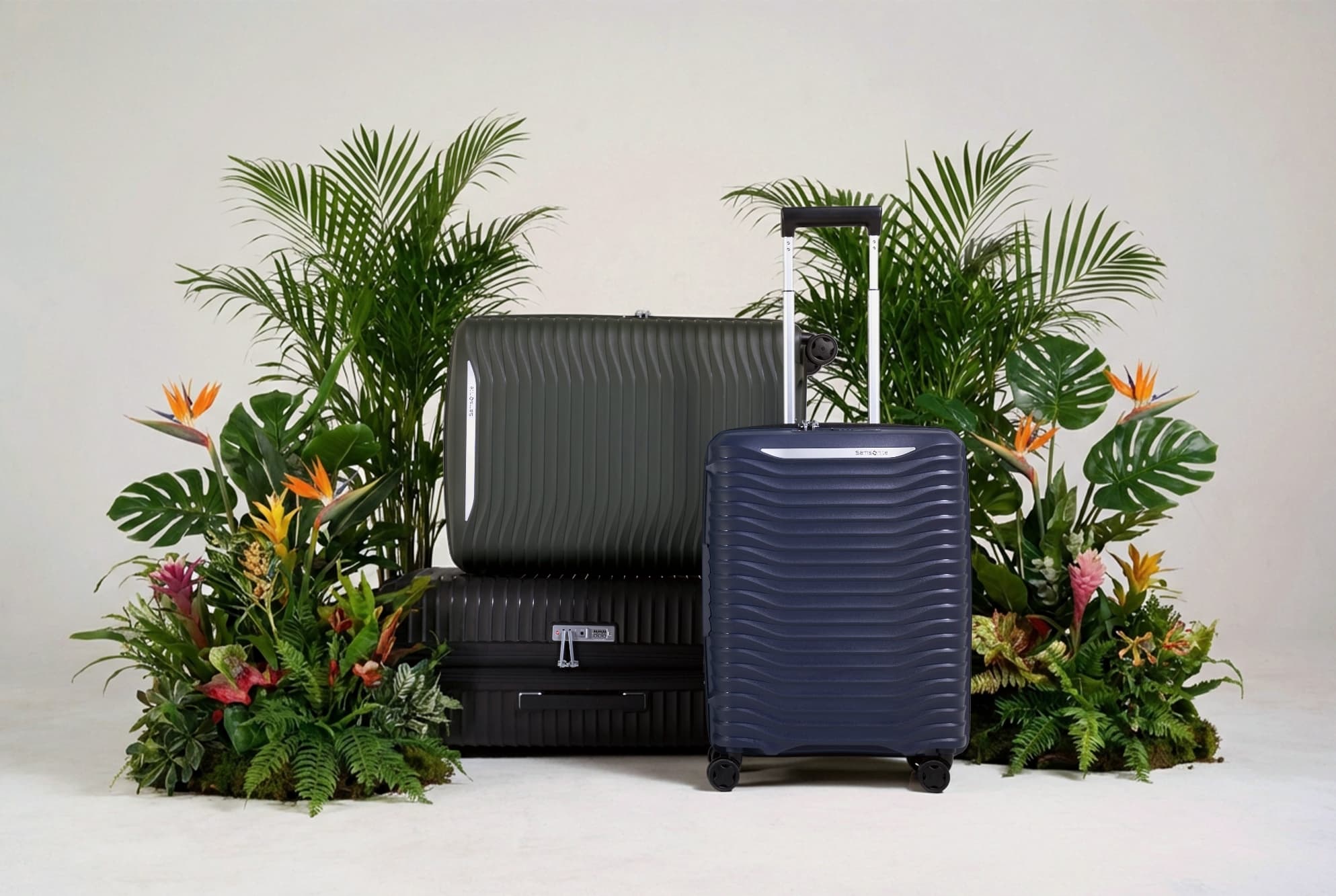
Samsonite’s annual Luggage Trade-In campaign reflects a growing trend among legacy lifestyle brands attempting to integrate circularity into product categories traditionally defined by durability and long replacement cycles. The initiative allows customers to return suitcases of any brand, condition or age in exchange for discounts on new collections, effectively linking resale logic to new product consumption rather than decoupling use from purchase. Running across a defined seasonal window in 2026, the programme is positioned as a behavioural nudge towards more “mindful” consumption, while still anchoring participation in incentivised purchasing. Returned items are not explicitly positioned as part of a resale stream, but instead function as a catalyst for new sales — reinforcing a model of upgrade-driven replacement rather than extended product life.

The campaign is also paired with a charitable component, with a fixed donation made per trade-in transaction to WWF-Singapore, alongside symbolic in-store actions such as reduced energy usage during Earth Hour. These gestures align the initiative with broader environmental advocacy frameworks, though they remain operationally separate from the core manufacturing system. Alongside the campaign, Samsonite continues to introduce material-level adjustments across key product lines, including the use of recycled PET linings and lightweight polycarbonate or polypropylene shells. Collections such as Minter and Upscape highlight incremental improvements in material sourcing and weight reduction, reflecting an industry-wide shift towards efficiency and partial recycled input rather than full circular redesign.
Chaumet’s Sustainability Focus

Chaumet positions itself as a “naturalist jeweller,” with nature as a long-standing source of inspiration. In recent years, the Maison has expanded this relationship into a set of environmental commitments focused on sourcing, biodiversity and emissions reduction. The brand is a partner of WWF in France, Japan and China, supporting projects linked to forest protection and biodiversity. Since 2023, it has also worked with Reforest’Action, funding assisted natural regeneration in the Chantilly forest to help improve its resilience to climate change. As part of the LVMH LIFE 360 programme, Chaumet has set targets across key areas of sustainability. These include ensuring that 100 percent of its strategic raw materials are certified by 2026 to standards that address environmental and water resource protection. On climate, the Maison aims to reduce greenhouse gas emissions from its energy use by 50 percent by 2026 and to transition to 100 percent renewable energy by 2030.
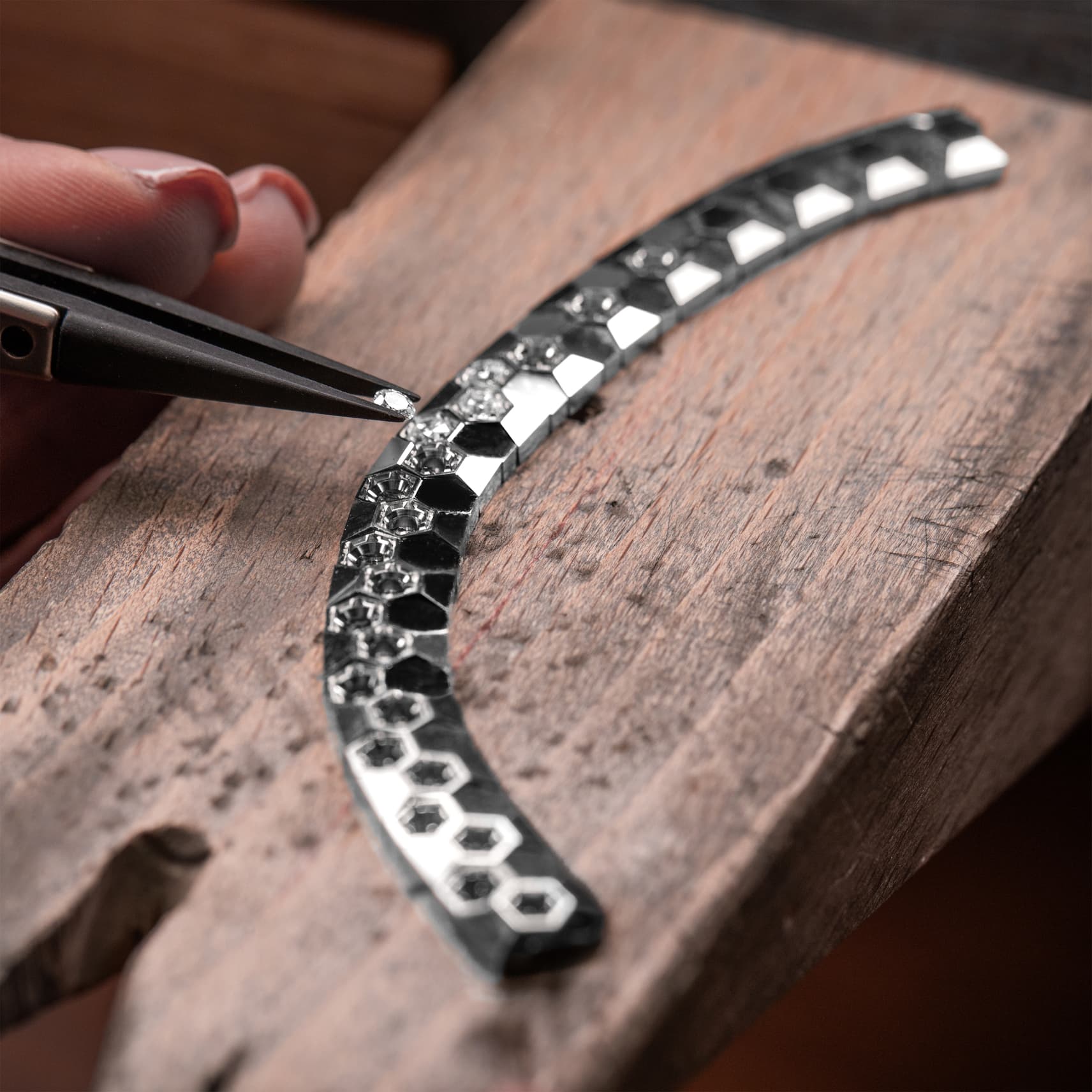
Chaumet is also developing lower-impact retail and display solutions, including eco-designed presentation sets made primarily from cardboard to reduce material use and transport weight. The Maison is a long-standing member of the Responsible Jewellery Council and is regularly audited against its standards. It also follows the Kimberley Process for diamonds and applies sourcing criteria intended to improve traceability across its supply chain. In addition, Chaumet has introduced initiatives around circularity, including collaborations that repurpose textile waste into exhibition materials, such as a project with FabBRICK during Paris Fashion Week.
Porsche: Venture Philanthropy and The “Innovation-led” CSR Model

Porsche’s “Start-up Your Dream” initiative reflects a growing trend among legacy industrial brands adopting venture-style sustainability programmes that blend corporate social responsibility with early-stage innovation funding. Positioned as a global accelerator for startups, the programme supports founders working on solutions related to climate resilience, education and social equity, with a particular focus on the Global South. The first supported venture, Atera Water, develops filtration technology aimed at improving access to clean drinking water in regions affected by scarcity and pollution. Built in collaboration with academic partners, the project is framed around scalable, energy-efficient infrastructure designed for real-world deployment, particularly in Southeast Asia.

Rather than direct product-level intervention, Porsche’s approach is structured around ecosystem building. Selected startups are integrated into a broader support framework that includes mentorship, university-led training, corporate networking and venture facilitation. Partnerships with external innovation platforms further embed the initiative within established startup and investment networks, reflecting a shift towards hybrid models of philanthropy and corporate incubation.
The programme sits under Porsche’s wider “Partner to Society” sustainability strategy, which positions the brand as a facilitator of social progress through education, funding and capacity building initiatives. This framing aligns corporate responsibility with entrepreneurial enablement, emphasising “helping others realise their potential” as a central narrative. However, while the initiative signals engagement with urgent global issues such as water scarcity and climate adaptation, its structure also reflects how corporate sustainability initiatives are expressed through indirect investment in external innovation, rather than the transformation of core manufacturing or mobility systems.
Hermès Sustainable Development Framework

From 2025 to 2026, Hermès has positioned sustainability as an operational system embedded across production, governance and supply chains rather than a standalone CSR agenda. On climate and energy, the group reports 100 percent renewable electricity use globally and 77 percent renewable energy overall, while advancing a Science-Based Targets initiative (SBTi)-aligned pathway to reduce absolute Scope 1 and 2 emissions and Scope 3 intensity in line with a 1.5°C trajectory. This is reinforced by a structured internal climate programme focused on defossilisation, energy efficiency upgrades and the application of its “Harmonie” responsible construction standard for new and renovated sites.
On industrial development, Hermès continues to expand its French manufacturing footprint with concrete capacity investments, including the 25th leather goods workshop inaugurated in Loupes (Gironde, 2026) and a pipeline of future sites planned in Charleville-Mézières (2027), Colombelles (2028) and Les Andelys (2030), explicitly linking production growth to local employment and training. In materials and supply chains, the group strengthens traceability and long-term sourcing partnerships while explicitly advancing regenerative agriculture pilots and stricter environmental and ethical certification requirements, particularly around animal welfare and raw material sourcing.

Socially, the “Hearts & Craft” model formalises commitments across diversity, wellbeing and employability, supported by structured mechanisms for employee development through the École Hermès des savoir-faire, alongside recognised craftsmanship pathways such as MOF (Meilleur Ouvrier de France) and Entreprise du Patrimoine Vivant (EPV) labels. In 2026, value sharing is also made tangible through the distribution of EUR 328 million to employees linked to 2025 results, including profit-sharing and a EUR 3,000 group-wide bonus, reinforcing long-term retention and participation in growth.
For more on the latest in luxury fashion and style reads, click here.
The post Luxury’s Latest Sustainability Initiatives and Developments appeared first on LUXUO.